


sustainable architecture: Building with bamboo
比钢强,比混凝土更强大,比木材更灵活 - 竹子可能会成为建筑行业的新奇迹材料。在亚洲,非洲和南美,这种可持续资源已用于建造几个世纪的房屋。并有充分的理由。

It’s hard to think of another raw material that’s proven to be as attractive as bamboo in recent years. (Photo: Paulina Saez on Unsplash)
Bamboo: the sustainable miracle plant
Native to tropical climatic regions, bamboo now covers an area of around 37 million hectares worldwide. The plant belongs to the Poaceae family of grasses and encompasses numerous different genera. Depending on the species, this incredible plant grows between 3 and 30 centimetres per day. This makes bamboo one of the fastest growing plants in the world. Many species are fully grown after only a few months or even weeks, at which point they may measure up to 40 metres in height.
长期以来,这种令人印象深刻的植物被低估了,在欧洲和北美,主要用作花园或阳台上的隐私屏幕。但是竹子从那以后,竹子已发展为可持续和多功能的解决方案,以满足多种需求,在我们的日常生活中立足。从牙刷到咖啡杯家具:在这种气候保护和有意识的消费时期,这种可再生的原材料在揭示其巨大潜力的情况下,尤其是在可持续建筑中产生了很大的影响。
生态友好的结构使用竹子
看看任何人口密度较高的城市,您会看到由石头,钢和混凝土制成的结构。尽管这些建筑材料已经经受了时间的考验,但碎石和沙子供不应求,木材很昂贵。自2021年初以来,建筑木材的价格几乎翻了一番 - 这个数字为整个建筑行业带来了新的挑战。伍德目前仍然是替代建筑材料,但竹子的特征将其置于阴影中。
The plant can be cut down and processed after only three years, whereas oak, maple and beech need to grow for several decades. Although bamboo poles are hollow on the inside, they’re similar to timber from trees in terms of stability. Unlike wood fibres, however, bamboo fibres are always arranged lengthwise, which makes them particularly sturdy, resilient and flexible. It’s bamboo’s combination of the compressive strength of concrete and the tensile strength of steel that makes it so attractive as a building material. Thanks to its structure, it’s often even able to withstand hurricanes and earthquakes without any difficulty.
原材料具有另一个决定性的优势,因为它是当今可用的最可持续的建筑材料之一。它的可持续性证书始于其增长条件。因为竹子非常有弹性,因此不需要环境破坏的农药和肥料。收获竹植物时,它不会被杀死。取而代之的是,部分茎留在森林中,刺激根系并促使植物再生。因为它的生长如此之快,所以竹子几乎是一种无限的可再生资源。此外,与钢,混凝土甚至木材等建筑材料不同,竹子具有负碳足迹。该植物吸收的二氧化碳最多是某些树种的四倍。结果,竹子正在为一种以前几乎不可能的生态友好型建设铺平道路,从而帮助推进了绿色建筑领域。
Green architecture: challenges facing the construction industry
与进步有关的挑战总是存在的。使用竹子的环保结构也不例外,因为它要求采用新的建筑技术。因为它是一种天然原材料,所以竹制纤维的形状不规则,厚度不均匀。各个极点的长度也有所不同。研究人员,工程师和家具设计师已经承担了这一挑战,并开发了现代技术,这将使竹子在未来更容易。
For example, Kyle Schumann and Katie MacDonald from the University of Tennessee have developed a milling machine that’s no bigger than a microwave. It’s a portable tool local craftspeople can use to produce bespoke components without leaving the building site. After all, one of the challenges of using bamboo for eco-friendly construction is how to form secure joints between the irregular ends of the naturally grown poles. The machine can be used to mill all manner of shapes as long as the walls of the material are sufficiently thick.
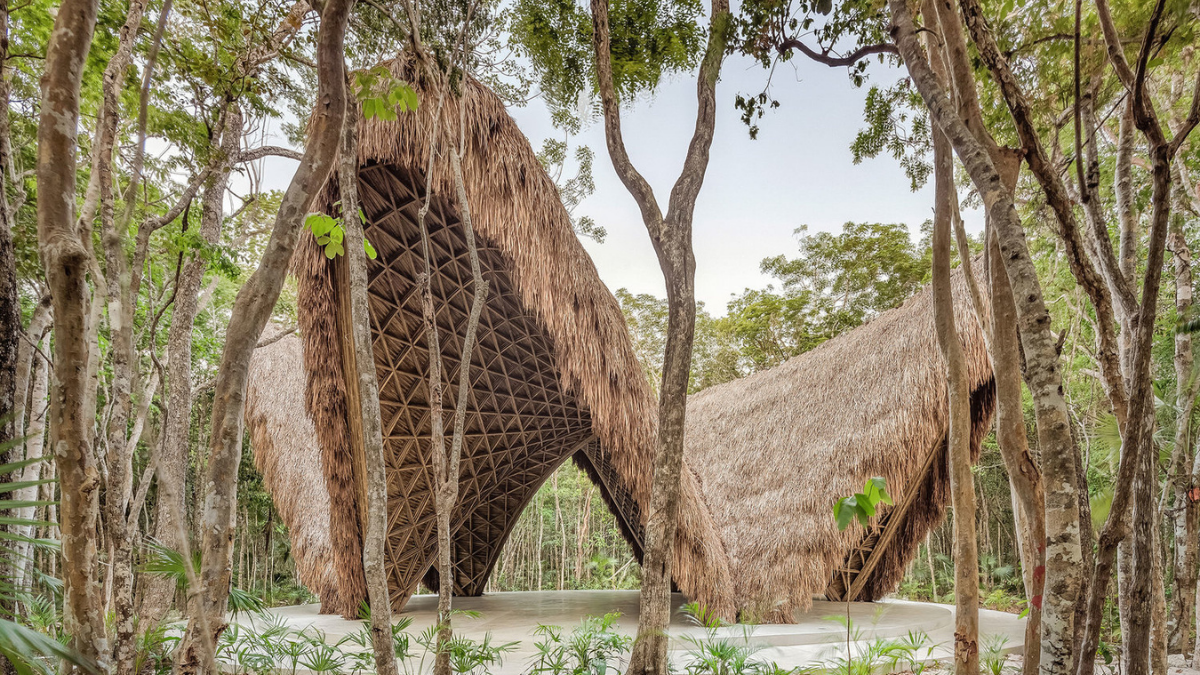
Another innovative approach comes from Mexico, where architecture firmco完全由竹子建造了一座环保建筑:卢姆神庙。受自然的启发,五个金库式的屋顶结构赋予了颠倒的花朵的外观。为了连接单个竹竿,其中一些厚度不同,它们是从扫描支撑结构开始的。一种算法计算了需要什么关节,然后使用塑料制成3D printer。
Research is also being carried out in Germany into technologies aimed at making eco-friendly construction using bamboo even more attractive. At Karlsruhe Institute of Technology, Dirk Hebel and his team have developed a bamboo composite material that’s 90 per cent composed of bamboo fibres and resins. This combination makes the bamboo even more robust and less vulnerable to damp.
so, what do these innovative ideas have in common? They give a clear impression of how future construction can and will look. After all, climate change and dwindling resources demand new ways of thinking.
The green steel of the future
天然,资源有效和灵活:竹子具有许多优势。特别是在可持续性方面,它作为建筑材料几乎是无与伦比的。作为木材的一种有吸引力的替代品,该工厂为建筑物和室内设计行业开辟了新的可能性,以便在可持续的未来中蓬勃发展。
You will find more exciting and innovative developments in the interior design and building industries in our imm cologne magazine newsletter.Click here to subscribe.